
SEMLA 2026 brings together researchers and practitioners from across academia and industry to address the most pressing challenges in AI-assisted software engineering. Over three days, invited speakers will share work on foundation models, agentic systems, trustworthy AI, and the social dimensions of deploying AI at scale, drawing on experience from organizations including Meta, Mozilla, RBC Borealis, ServiceNow, Vanguard, Databricks, Zup Innovation, Vanguard, Amazon FAR, and Huawei Canada, alongside leading university research groups across Canada, the United States, and Europe.
Invited Speakers










Speaker Bios
Industry Day – June 1st, 2026
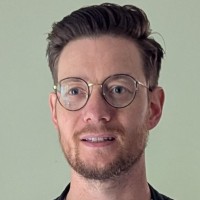
Peter Rigby is a Full Professor of Software Engineering at Concordia University in Montréal and a Software Engineering Researcher at Meta. His research studies how software developers collaborate to build successful systems, with a focus on code review, coordination, empirical software engineering, and the social structure of software teams.
His work is driven by evidence from real development settings and aims to identify practices that make software engineering more reliable, scalable, and effective. For SEMLA 2026, Peter brings deep expertise in the human and organizational side of software engineering, especially as agentic systems change how teams review code, coordinate work, and decide which parts of engineering should remain under human judgment.
Keynote title: Moving Faster with Less Risk: DRS for Code Freeze and Code Review at Scale
Moving Faster with Less Risk: DRS for Code Freeze and Code Review at Scale
As software engineers increasingly direct, review, and integrate AI-assisted code, organizations need better ways to decide which changes are safe to ship and which deserve scarce expert attention. This talk presents a line of work on Diff/Defect Risk Score (DRS), a just-in-time defect prediction system that estimates whether a code change is likely to cause a production fault at Meta.
The talk begins with the deployment setting at Meta, where DRS has been remarkably successful. By using LLM-based risk prediction to distinguish safer changes from riskier ones, DRS enabled release processes to move away from broad code freezes toward more targeted, risk-aware deployment decisions. This reduced unnecessary blocking of low-risk work while still helping teams control production risk.
The same risk signal can also improve code review. Change safety depends not only on whether a diff is risky, but also on whether the right people review it. The Contribution-aware Changeset Safety Ratio captures the combined expertise of the author and the reviewer team, and motivates using risk signals to focus expert reviewers on the riskiest diffs.
Together, these works show how defect prediction becomes most valuable when embedded into real engineering workflows: deciding what can safely ship, selecting the right reviewers for risky changes, and helping engineers focus attention where it matters most.
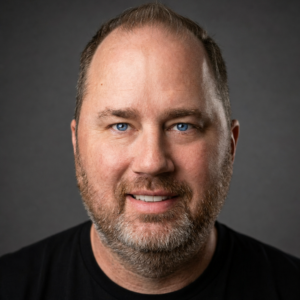
Vincent Fortier leads Field Engineering for Databricks’ Public Sector business in Canada. His team helps governments, hospitals, and universities move AI and ML workloads from pilot to production, with the constraints of citizen data, PHI, and public accountability baked in.
With 20+ years on the technical side of enterprise data and machine learning, his focus is on what it actually takes to ship ML systems that hold up in the real world: trust, scale, compliance, and the engineering discipline that gets you there.
Talk title: AI Deployment, Governance, and Lakewatch
AI Deployment, Governance, and Lakewatch
AI is being deployed faster than the controls around it, and security teams are the ones paying the bill. In this session, Vincent shows how Databricks gives you a single governed foundation for data, AI, and agents, so innovation doesn’t outrun oversight. The talk closes with a look at Lakewatch, Databricks’ open agentic SIEM built for machine-speed defense.

Nikita Dvornik is an AI researcher affiliated with RBC Borealis. His work is in machine learning and computer vision, with emphasis on representation learning, visual understanding, and models that can generalize from limited supervision.
His background in perception and learning systems adds a strong perspective on robustness, generalization, and model behavior under real-world constraints. For SEMLA 2026, his work connects AI research to high-stakes production settings where models need to perform reliably beyond controlled benchmarks.
Talk title: Foundation Models for Financial Services
Foundation Models for Financial Services
This talk explores the emerging paradigm of foundation models trained on transaction data: large-scale models that learn behavioural embeddings from billions of financial events, much like LLMs learn from text. We discuss how these models are built and used, on their own or in tandem with LLMs, and share how they unlock powerful downstream applications across credit decisioning, fraud detection, and personalized advisory, opening a new chapter in AI for financial services.

Patrice Béchard is an Applied Research Scientist at ServiceNow in Montréal, where he works on AI agents for enterprise automation. His research studies how large language models can reliably interact with complex enterprise systems to execute real-world workflows.
His recent work includes workflow generation, business-process automation, web agents, agent debugging, retrieval-augmented generation, and reducing hallucinations in structured outputs. Patrice fits SEMLA 2026 directly because his work sits at the center of enterprise agents: how they act, how they are evaluated, and how teams can make their outputs reliable enough for production use.
Talk title: From Coding Assistants to Enterprise Knowledge Workers

Gustavo Pinto is an AI Engineer at Zup Innovation and a software engineering researcher with experience across research and industry. His work spans open-source software, human aspects of software engineering, empirical software engineering, mining software repositories, AI agents, foundation models, and machine learning for software engineering.
He has published widely in software engineering venues and works on problems that connect developer productivity with intelligent software tools. At SEMLA 2026, Gustavo brings a practical view of how software teams adopt AI systems, how developer workflows change, and what evidence is needed before organizations trust these tools.
Talk title: Lessons from Building an Enterprise Coding Agent: Open Questions and Challenges
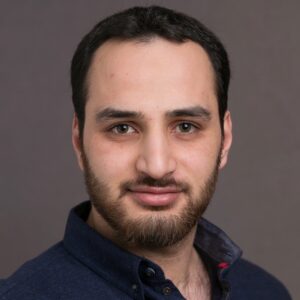
Suhaib Mujahid is a Staff Machine Learning Engineer at Mozilla, where he leads projects at the intersection of software engineering and applied machine learning. His focus is on building AI agents, bridging research and practical engineering, and tackling complex software engineering challenges.
He received his PhD in Software Engineering from Concordia University in 2021, with research spanning mining software repositories, software ecosystems, release engineering, and machine learning on code. His work has been published at ICSE, FSE, ICSME, and MSR, as well as in TSE, EMSE, and TEM.
Talk title: From Idea to Production: Building an AI Code Reviewer for a Large Codebase
From Idea to Production: Building an AI Code Reviewer for a Large Codebase
Shipping an AI reviewer into daily engineering use comes down to a series of decisions about scope, signal, filtering, and audience, and each decision has a real tradeoff. Using Mozilla’s Review Helper, an AI code reviewer running across the Firefox codebase, as a running example, this talk discusses how those decisions compound, where the non-obvious tradeoffs sit, and how the choices that look small at the start come to define what the agent can and cannot be.
We reflect on which decisions proved load-bearing in practice and on the open questions they raise for the design and evaluation of agentic systems in software engineering.

Lovedeep Gondara is Head of AI Research and Development at Vanguard and an Adjunct Professor at the University of British Columbia. He is a machine learning researcher whose work spans large and small language models, agentic methods, model grounding, privacy-preserving machine learning, differential privacy, deep learning, decentralized learning, statistics, and multimodal machine learning.
He earned his PhD in Computer Science from Simon Fraser University and has worked on applying machine learning in sensitive domains where reliability, privacy, and governance matter. At SEMLA 2026, Lovedeep brings a regulated-industry perspective on trustworthy AI, responsible deployment, and language-model systems that need to operate under real organizational constraints.
Talk title: The Importance of Trustworthy AI in Heavily Regulated Domains
The Importance of Trustworthy AI in Heavily Regulated Domains
The deployment of AI systems in heavily regulated domains such as healthcare and finance presents unique challenges that extend beyond technical performance metrics to encompass fundamental questions of trust, accountability, and societal impact. Both sectors share critical characteristics: they involve high-stakes decisions with material consequences for individuals, operate under stringent regulatory oversight, and are fundamentally client-facing, requiring that end-users place significant trust in system outputs that may influence their health outcomes or financial wellbeing.
This talk examines the core pillars of trustworthy AI in these contexts, including transparency and explainability of model decisions, robustness to distribution shift and adversarial inputs, fairness across demographic groups, rigorous validation against domain-specific standards, and mechanisms for human oversight and intervention.
Trustworthiness is a practical necessity, not merely an ethical desideratum. Systems that fail to earn stakeholder trust face regulatory barriers, adoption resistance, and reputational risk. By drawing parallels between both heavily regulated domains, the talk identifies transferable lessons for building AI systems that meet the elevated standards these domains demand.

Julen Urain is an Applied Scientist at Amazon FAR, where he works on dexterous manipulation and robot learning. His research focuses on building generalist robots by combining deep generative models, 3D robot learning, learning from video, optimization, and data-driven control.
Before joining Amazon FAR, Julen was a Research Scientist in the Robotics group at Meta FAIR. He previously worked as a postdoctoral researcher at the Intelligent Autonomous Systems lab and DFKI, and received his PhD in Computer Science from TU Darmstadt under the supervision of Jan Peters.
His work studies how robots can learn useful behavior from data, including demonstrations, learned motion representations, diffusion models, energy-based methods, and optimization-based control. At SEMLA 2026, his talk brings a robotics perspective to the broader question of how AI systems can learn, generalize, and act reliably in physical environments.
Talk title: Robot Learning: Making Robots Learn How to Behave from Data
Robot Learning: Making Robots Learn How to Behave from Data
Robots are moving from hand-programmed behavior toward systems that learn from data. This talk introduces robot learning as the problem of teaching robots how to behave in physical environments using demonstrations, interaction data, learned representations, and optimization.
The session discusses why learning robot behavior is difficult: robots must act under physical constraints, generalize across objects and scenes, and remain robust when real-world conditions differ from the training data. It also connects recent progress in deep generative models, 3D robot learning, learning from video, and motion optimization to the long-term goal of building more general robot systems.
The talk gives SEMLA attendees a practical view of how data-driven methods are changing robotics, and what software engineering challenges emerge when learned robot policies must be evaluated, deployed, monitored, and trusted in the real world.
Research Day – June 2nd, 2026

Dr. Tanja Tajmel is an Associate Professor at the Centre for Engineering in Society, Gina Cody School of Engineering and Computer Science, Concordia University. She earned her PhD in Didactics of Physics from Humboldt-University Berlin and holds a BSc in Meteorology and Geophysics and an MSc in Physics and Philosophy from the University of Graz, Austria.
Internationally recognized for her leadership in developing frameworks for socially equitable research and education in science and technology, she has led several inter- and transdisciplinary initiatives including a think tank exploring STEM education as a human right. Since 2021, she has been Co-PI in the pan-Canadian NSERC CREATE program SE4AI, where she designed the graduate course Social Aspects of AI. Since 2024, she serves as Scientific Director for Equity, Diversity and Inclusion at Volt-Age, Concordia’s large-scale research program supported by the Canada First Research Excellence Fund.
Keynote title: Social Dimensions of AI: Challenges and Opportunities for Software Engineering Education
Social Dimensions of AI: Challenges and Opportunities for Software Engineering Education
Artificial intelligence has fundamentally transformed a wide range of industries over the past decade and is expected to reshape nearly every aspect of society in unprecedented ways. Software developers are at the forefront of this development, both as creators and as professionals whose working lives are shaped by the very technology they build. Rather than viewing AI as a neutral set of tools, it is becoming clear that it is embedded in complex social, economic, and ecological systems. From dependence on global networks of labor, data, and natural resources to the diverse applications of AI systems, these technologies raise critical questions about ethics, responsibility, and what we as humans consider a decent life. The talk explores how higher education in science and engineering fields, particularly in software engineering, can respond to these pressing questions of our times.
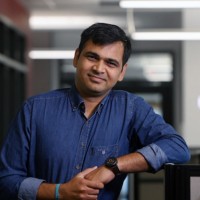
Tushar Sharma is an Assistant Professor in the Faculty of Computer Science at Dalhousie University. His research focuses on software design and architecture, refactoring, code quality, technical debt, software maintenance, mining software repositories, and machine learning for software engineering.
Before academia, Tushar worked at Siemens Research in the United States and Siemens Corporate Technology in India. He has written extensively on software design smells, refactoring, and maintainability. His SEMLA fit is strongest around sustainable AI, ML for software engineering, maintainability, and the engineering discipline needed to build reliable AI-driven systems.
Talk title: Sustainability in AI Systems: Challenges and Opportunities
Sustainability in AI Systems: Challenges and Opportunities
Artificial Intelligence (AI) models are energy-hungry. As these models grow larger and become more complex, their energy consumption increases substantially. This leads to higher carbon emissions and rising operational costs, creating serious challenges for sustainable computing. This talk highlights the environmental impact of modern AI systems, introduces key metrics for measuring energy use and carbon footprint, and discusses available tools and frameworks for measuring and monitoring energy consumption.
The session summarizes current research and practical techniques for developing greener AI systems, including model pruning, quantization, efficient architecture design, and workload scheduling, and situates these within the wider movement toward responsible and sustainable AI development. The talk concludes by highlighting important open research challenges and calling on the community to treat energy efficiency not as an afterthought but as a first-class objective in the design and evaluation of AI systems.

Dr. Nafiseh Kahani is an Assistant Professor in the Department of Systems and Computer Engineering at Carleton University. Her research focuses on software testing, AI-based systems testing, machine learning applications in software engineering, and software security. Her research lab is actively involved in industry-funded projects, including automated program and test repair, as well as data privacy in large language models. Her work has been published in top-tier venues, including the IEEE Transactions on Software Engineering (TSE).
Talk title: Testing Multi-Agent AI Systems
Testing Multi-Agent AI Systems
Multi-agent AI systems are increasingly used to coordinate agents, tools, permissions, and delegation across complex workflows. However, current evaluations often focus mainly on final task success, which may not show whether the system’s internal coordination structure has actually been evaluated. This talk introduces a new evaluation approach for multi-agent systems, focusing on how to evaluate agent reachability, tool access, permission boundaries, and delegation paths. The goal is to move beyond simple outcome-based evaluation and provide better evidence that multi-agent systems are evaluated in a meaningful and systematic way.

Dr. Thomas Tannou is a geriatrician and clinician-scientist at the Institut universitaire de gériatrie de Montréal (IUGM), Assistant Clinical Professor at the Université de Montréal, and IVADO Professor. His research focuses on decision-making, self-awareness deficits (anosognosia), and autonomy in older adults living with cognitive impairment, particularly Alzheimer’s disease.
He leads interdisciplinary projects exploring the real-world deployment of trustworthy AI and smart technologies to support aging in place, social participation, and ethical care. His work combines geriatrics, cognitive neuroscience, ethics, and human-centered technology design, with a strong emphasis on clinical reality and shared decision-making.
Talk title: Can AI support autonomy for aging in place when self-awareness fades?
Can AI support autonomy for aging in place when self-awareness fades?
Artificial intelligence is increasingly presented as a promising tool to support aging populations, especially in contexts of cognitive decline and aging in place. However, real-world clinical practice reveals a more complex reality. Autonomy is not limited to functional independence. Cognitive disorders can alter insight, judgment, and risk perception themselves. As a result, expressed wishes may not always align with underlying needs, creating major challenges for decision-making algorithms and AI-supported care.
Drawing from clinical geriatrics and ongoing real-world technology projects involving older adults living with cognitive impairment, this talk will examine how AI systems confront human vulnerability, fluctuating cognition, and relational decision-making. Particular attention will be given to anosognosia, impaired self-awareness frequently observed in Alzheimer’s disease, as a critical but often overlooked challenge for trustworthy AI design.
Rather than focusing solely on system performance, this presentation will discuss how clinically grounded perspectives can help develop AI systems that are safe, adaptive, ethically responsible, and aligned with the lived realities of people living with dementia, care partners, healthcare teams, and support communities.
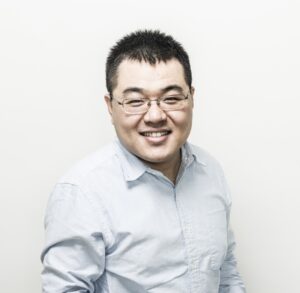
Zhen Ming (Jack) Jiang is an Associate Professor and York Research Chair at York University in Toronto. His research spans software engineering for and with AI, software performance engineering, and software maintenance.
He is a co-organizer of the Shonan Meeting on “Foundation Models and Software Engineering” and has co-organized AIWare events including FM+SE Summit 2024 and the 2025 AIWare Bootcamp. He received his PhD from Queen’s University and previously worked with the Performance Engineering team at BlackBerry, where tools from his research are used daily to monitor and debug ultra-large commercial software systems.
Talk title: Beyond Vibe Coding: Towards Agentic Software Engineering
Beyond Vibe Coding: Towards Agentic Software Engineering
Foundation Models (FMs) are rapidly democratizing technology across many domains, and software engineering is no exception. Today, even individuals without a programming background can build functional software through natural language interactions with AI, a phenomenon called Vibe Coding. While this lowers the barrier to software creation, developing production-quality, reliable software demands something far more rigorous. This need motivates Agentic Software Engineering (Agentic SE): a discipline in which FM-powered agents plan, reason, act, and verify across the entire software engineering lifecycle, with humans maintaining meaningful oversight.
In this talk, I present our recent work along two fronts of Agentic SE. First, I introduce a dynamic benchmarking framework grounded in the Bloom’s Taxonomy that transforms static SE benchmarks into structured, multi-layered evaluations. Applied to automated program repair and bug-report-driven test case generation, the framework examines FM-powered agents across progressively demanding cognitive layers, from recalling known fixes to generalizing into entirely new project contexts.
Our findings reveal that current SE agents rely heavily on memorized patterns and suffer sharp performance drops under modest perturbations, exposing a significant gap between benchmark scores and genuine capability. Second, I share lessons learned from building agentic systems for cross-platform mobile app translation from Android to both iOS and HarmonyOS.
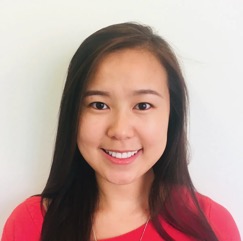
Dr. Yu Huang is an Assistant Professor of Computer Science at Vanderbilt University, where she directs the MIND Lab (Mixed INtelligence Development for Programming). Her research focuses on human-centered AI for software engineering, with an emphasis on computationally modeling human cognition and integrating those insights into AI systems for programming.
By combining methods such as medical imaging, eye tracking, and cognitive modeling, her work uncovers human cognitive processes to inform the next generation of AI-assisted programming tools. Her research also spans computer science education, human-AI collaboration, and the long-term sustainability of open-source software ecosystems.
Dr. Huang has received four ACM SIGSOFT Distinguished Paper Awards, the NSF CAREER Award, the 2025 ICPC Vaclav Rajlich Early Career Achievement Award, and recognition as a 2021 EECS Rising Star. Her work has been supported by NSF, GitHub, ARPA-H, and Vanderbilt University. She holds a PhD in Computer Science and Engineering from the University of Michigan.
Talk title: Decoding and Encoding Expertise: Toward Human-Centered AI for Software Engineering
Decoding and Encoding Expertise: Toward Human-Centered AI for Software Engineering
As AI becomes a fundamental partner in the software development lifecycle, a critical gap has emerged: while modern models excel at predicting code tokens, they remain cognitively blind to the high-level reasoning, intentionality, and memory constraints of human programmers. This cognitive misalignment results in AI models that often fail to match human judgment, leading to diminishing returns as task complexity increases. The first half of the talk focuses on decoding the developer.
By establishing a systematic methodology to model developers’ cognitive processes, Dr. Huang uncovers the complex relationship between programming and natural language processing while providing a framework to quantify human expertise for software engineering. The second half focuses on encoding this expertise to drive measurable gains in AI for SE, moving from data-centric augmentation techniques to a cognitive theory-grounded approach.
The results show that integrating human cognitive signals, such as expert attention patterns, significantly surpasses the performance of traditional cognitively-unaware AI models, with substantial improvements in tasks like code summarization and comprehension.

Orlando E. Marquez is a Lead Applied Research Scientist at ServiceNow with a strong background in software engineering. His research focuses on natural language processing, text-to-text systems, explainability, error analysis, semi-supervised learning, summarization, structured outputs, and text-to-workflow generation.
Orlando has worked on shipping NLP and GenAI systems to enterprise users, including low-code workflow generation and structured outputs from natural-language requirements. His SEMLA contribution is strongest around turning AI research into deployed enterprise systems with careful evaluation, engineering constraints, and user-facing reliability.
Talk title: Challenges in Building Voice Agents for the Enterprise
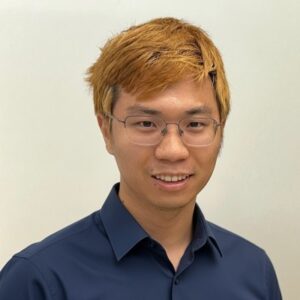
Boqi (Percy) Chen is an Assistant Professor in the School of Electrical Engineering and Computer Science at the University of Ottawa. His research focuses on the reliable and robust integration of AI components, particularly large language models, into software engineering processes.
He received his PhD from McGill University and during his doctoral studies worked as an R&D Engineer at Aggregate Intellect through a Mitacs collaboration and as a part-time Research Associate at the Huawei Waterloo Research Center. For SEMLA 2026, his work emphasizes improving the reliability of AI-based software engineering automation through approaches that provide provable guarantees.
Talk title: Reliable Generation of Software Artifacts with LLMs: From Ad-Hoc Validation to Semantics-Aware Generation
Reliable Generation of Software Artifacts with LLMs: From Ad-Hoc Validation to Semantics-Aware Generation
Software engineering demands artifacts that satisfy rigorous syntactic and semantic constraints, yet large language models are inherently probabilistic and non-deterministic. As LLMs are increasingly used to automate software engineering tasks, ensuring the reliability of the artifacts they produce becomes a critical challenge. This talk presents recent efforts toward reliable AI-based generation of software artifacts, particularly domain-specific languages and other structured representations.
It first demonstrates how current LLMs frequently violate both syntactic and semantic constraints, then presents two complementary approaches: AbsCon, a post-processing framework that leverages self-consistency to ensure provable specification compliance, and Projectional Decoding, a semantics-guided decoding approach that proactively steers generation toward valid outputs. Together, these approaches illustrate emerging directions toward LLM-based software automation that developers can trust.

Dalal Alrajeh is an Associate Professor (Reader) in Computer Science at the Department of Computing, Imperial College London. Her research lies at the intersection of Artificial Intelligence and Software Engineering, with a focus on developing formal methods for the design and verification of AI-enabled and safety-critical software systems. She works on synthesis, analysis, and refinement of formal specifications, as well as adaptive, evolvable, and accountable software design.
Her work is published in leading venues such as ICSE, ASE, ESEC/FSE, and AAAI. She is an Associate Editor of the IEEE Transactions on Software Engineering (TSE) and an active member of the international software engineering community, serving on program committees of flagship conferences including ICSE, FSE, ASE, and OOPSLA, as Workshop Chair for ICSE 2025 and NIER Chair for ICSE 2027, and as a member of the IFIP 2.9 Working Group on Requirements Engineering. Alrajeh has received research funding exceeding £3.5M, including awards to lead the development of decision support systems for the National Crime Agency, and is a recipient of the Amazon Research Award 2026.
Talk title: Engineering Trustworthy AI Decision-Support Systems for Law Enforcement
Engineering Trustworthy AI Decision-Support Systems for Law Enforcement
Artificial Intelligence (AI) and Machine Learning (ML) systems are increasingly explored to support law-enforcement investigations, including crime linkage analysis and online child sexual abuse investigations. However, many AI-enabled systems fail in practice because user requirements, operational constraints, and human responsibilities are not sufficiently understood during system design.
This talk presents a series of collaborative studies conducted with UK law-enforcement agencies on the engineering and evaluation of AI-assisted investigative systems. First, we report findings from qualitative studies examining how analysts make decisions in practice and identify requirements for scalability, explainability, trustworthiness, adaptability, and human oversight.
Second, we describe our experience applying a Goal-Oriented Requirements Engineering framework to the design of an ML-enabled suspect identification system, highlighting the strong interdependencies between goals, data, and ML performance. Finally, we present results from an industrial evaluation of an AI-enabled crime-linkage tool, showing that analysts selectively considered AI predictions while validating outputs using traditional behavioural evidence.

Zhou Yang is an Assistant Professor in the Department of Computing Science at the University of Alberta and an Amii Fellow. His research focuses on trustworthy AI, automated software engineering, software engineering for AI, human-AI interaction, reinforcement learning, and large language models for code.
He completed his PhD at Singapore Management University, earned an MSc in Software Systems Engineering from University College London, and previously worked as a senior research engineer at the Centre for Research on Intelligent Software Engineering. His work examines how code models and AI-assisted development tools can be made more secure, private, efficient, and usable.
Talk title: Engineering Trusted Reinforcement Learning Agents
Engineering Trusted Reinforcement Learning Agents
Reinforcement learning has enabled the development of effective agents for critical tasks across domains such as robotic control, autonomous driving, AI coding assistance, and computer use. In this talk, I will discuss the trustworthiness challenges of RL-based agents. I will first uncover robustness issues in RL agents and show how curiosity-driven mechanisms can be leveraged to expose flaws in their decision-making. Next, I will discuss how to provide runtime verification and protection for these agents. We will also examine the hidden risks in the prevailing practice of fine-tuning agents on trajectories, including backdoor attacks and watermarking. Finally, I will share a broader outlook on the intersection of reinforcement learning and software engineering.
SEMTL and Tutorials – June 3rd, 2026

Maxime Lamothe is an assistant professor at Polytechnique Montreal (and currently looking for Masters and Ph.D. students). In early 2021 he was a postdoctoral researcher studying software build systems in the Software REBELs Lab at the University of Waterloo under the supervision of Prof. Shane McIntosh. His doctoral thesis focused on reducing knowledge gaps between the users and developers of software APIs. He obtained his Ph.D. from Concordia University (2020), M.Eng degree from Concordia University (2017), and my B.Eng at McGill University (2013). His primary research interests lie in empirical software engineering, mining software repositories, software APIs, build systems, software performance, and bug-detection.
Keynote title: Just Fax It Over: Why Digitalizing Municipalities Is Hard
Just Fax It Over: Why Digitalizing Municipalities Is Hard
Cities promise smart infrastructure, real-time data, and seamless digital services. Behind the scenes, however, many municipal systems still rely on fragmented processes, siloed governance, and aging legacy technology. This keynote cuts through the hype to show why applying software engineering to society is both essential and incredibly complex.
Drawing on the Ville_IA experience, we will explore decentralized data ownership, multi-actor coordination across utilities and provincial agencies, and the messy reality that undermines assumptions about digital twins and urban AI. From incompatible datasets to projects managed by multiple independent entities, municipal digitalization is ultimately a socio-technical maze rather than a simple technical challenge.
This talk delivers an honest look at why cities can struggle to fully leverage AI, offering concrete insights on what it will actually take to move from fax-era workflows to sovereign, data-driven urban systems.

Qiaolin (Isabelle) Qin is a third year PhD student in the Department of Software Engineering at Polytechnique Montréal. Her research focuses on improving AI-based software trustworthiness and security.
Isabelle serves as a reviewer and organizing committee member at top journals and conferences. Her research interests include software monitoring, AI model explainability, and reverse engineering. At SEMLA 2026, she brings insights into the novel security issues brought by the integration of AI models, and how to address these challenges by enhancing software supply chain transparency.
Talk title: Into the Unknown: Enhancing the Transparency of AI-based Software Systems
Into the Unknown: Enhancing the Transparency of AI-based Software Systems
We are shifting toward an era of AI-based software engineering, where large language models and AI agents are being continuously integrated into software systems. While their integration improves software performance, these non-deterministic models also turn software systems into unexplainable black boxes. This talk reveals transparency challenges in major AI-based software systems and proposes low-cost, high-performance strategies to promote software transparency and trustworthiness.
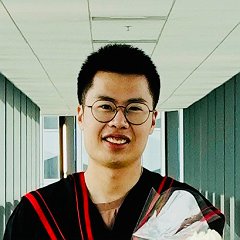
Zhijie Wang is an Assistant Professor in the Department of Computer Science and Software Engineering at Concordia University. He received his PhD in Software Engineering from the University of Alberta in 2025, and was a recipient of the ACM SIGSOFT Distinguished Paper Award at FSE 2023.
His research sits at the intersection of Software Engineering and Human-Computer Interaction, with a focus on quality assurance for AI software systems. Recent work includes automated robustness testing for multi-sensor fusion perception systems and testing vision-language-action models for robotic manipulation, with publications at ICSE, FSE, CHI, TSE, and TOSEM.
Talk title: Towards Robust Perception for Autonomous Driving Systems
Towards Robust Perception for Autonomous Driving Systems
Autonomous driving systems increasingly rely on AI-enabled perception systems based on multi-sensor fusion, yet their robustness and reliability under real-world conditions remain insufficiently understood. As these systems are deployed in increasingly complex and safety-critical environments, ensuring their dependable operation has become a fundamental challenge for both academia and industry. This talk first discusses the key robustness challenges faced by modern autonomous driving perception systems, then presents recent research on automated testing techniques for improving effectiveness and efficiency through realistic multi-modal test generation and dynamic driving scenario synthesis. The talk closes with a broader perspective on advancing robust autonomous driving systems in the era of foundation models and generative AI.
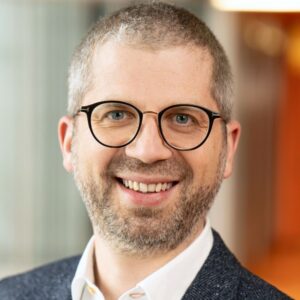
Fabian Denner has over 16 years of scientific experience in the development of numerical methods and computational tools for the prediction and analysis of multiphase flows. His work encompasses both fundamental and applied research on multiphase flows, the development of mathematical models to describe physical phenomena related to multiphase flows and acoustics, as well as the development of numerical methods for incompressible and compressible flows.
Fabian currently serves as the vice-chair of the technical committee on Fluid Mechanics Engineering of the Canadian Society for Mechanical Engineering (CSME).
Talk title: Computational fluid dynamics and my losing fight against code complexity
Computational fluid dynamics and my losing fight against code complexity
Developing scientific software capable of addressing real-world fluid dynamics problems is inherently complex, particularly for researchers who were never formally trained as software engineers. In this talk, I will share my personal journey in computational fluid dynamics software development, beginning with a blank page as a PhD student in 2009, passing through ambitious attempts to build “one-size-fits-all” simulation frameworks, and eventually arriving at a more pragmatic philosophy centered on specialized tools for specific classes of flows and applications.
Beyond the technical challenges of numerical methods and classical software maintenance, onboarding new students into rapidly evolving software ecosystems is becoming an ever more challenging task.
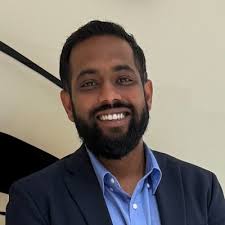
Gopi Krishnan Rajbahadur is a Principal Researcher at Huawei’s Centre for Software Excellence in Canada, where he leads the data and post-training team for the Pangu Foundation Model, advancing its software engineering capabilities. He is also a Research Associate at the Software Engineering and Analysis Lab (SAIL) at Queen’s University, where he leads research on AI supply chain and trustworthy AI agent ecosystems.
His research focuses on software engineering for AI-powered systems, requirements engineering for AIware, and the governance and compliance of AI datasets. He co-leads the AI and Datasets Profile in the ISO/IEC SPDX standard and co-organizes the International Workshop on Requirements Engineering for AI-powered Software (RAISE).
He also co-organizes the AIware Bootcamp series in Toronto, Ottawa, and Amsterdam, and regularly shares practical guidance through talks, tutorials, and briefings at venues such as ICSE, FSE, ASE, KDD, and CSER. His work has appeared in premier software engineering venues including TSE, TOSEM, EMSE, ASE, FSE, ICSE, and KDD.
Tutorial title: Software Engineering for Foundation Models (SE4FM)
Software Engineering for Foundation Models (SE4FM)
Foundation models are among humanity’s most complex software systems. They are currently engineered through tribal knowledge and ad-hoc processes, despite quarterly release cadences and rapidly expanding model size, context length, and modality.
This 90-minute technical briefing presents SE4FM, a disciplined software engineering framing for foundation models, organized around four pillars: DataOps, ExperimentOps, EvalOps, and FieldOps. These pillars cover data decision-making, curation, optimization, and governance; hypothesis-driven and scaling-law-aware experimentation; systematic testing, prioritization, and debugging; and release, monitoring, and compliance practices.
The session gives software engineering researchers an insider view of how foundation models are built and operated at scale, while surfacing concrete software engineering challenges and opportunities where new methods, tools, and theory are urgently needed.
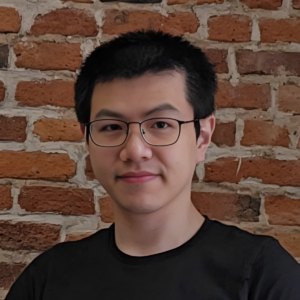
Hao Li is a postdoctoral researcher at Queen’s University’s SAIL and MCIS Labs. His research focuses on Agentic Software Engineering and Software Engineering for Artificial Intelligence.
He leads the creation of the AIDev dataset and conducts foundational research on coding agents, AI ecosystems, and machine learning software quality. His work examines how autonomous AI agents are changing software development practice, including how agent-authored contributions should be studied, evaluated, and integrated into trustworthy software workflows.
He serves as co-chair for the AgenticSE workshops at KDD 2026 and ACM CAIS 2026, as well as Mining Challenge co-chair for MSR 2026. At SEMLA 2026, his tutorial connects empirical evidence from real agent activity with the engineering concepts needed to design disciplined human-agent software processes.
Tutorial title: Agentic Software Engineering: A Roadmap to Software Engineering 3.0
Agentic Software Engineering: A Roadmap to Software Engineering 3.0
Software Engineering is shifting from AI-assisted development, often described as SE 2.0, to Agentic Software Engineering, or SE 3.0, where autonomous AI agents act as collaborators. This technical briefing establishes the foundations of a disciplined SE 3.0 practice.
The tutorial synthesizes a large-scale characterization of agent activity in the wild based on the AIDev dataset, an empirical study of 567 Claude Code pull requests across 157 open-source software projects, and the Structured Agentic Software Engineering framework that reframes actors, processes, artifacts, and tools.
Attendees will leave with evidence-backed mental models, evaluation patterns for agent-authored pull requests, and a practical vocabulary, including agent command environment and agent execution environment, for designing trustworthy human-agent workflows.

Wuyang (David) Dai
York University
Wuyang (David) Dai is a Master of Applied Science student in Electrical and Computer Engineering at York University, supervised by Prof. Song Wang. His research lies at the intersection of software engineering and artificial intelligence, with interests in AI for software engineering, software reliability, software testing, and reliability assurance for AI-based systems.
Talk title: Behavior-Driven Fuzzing for AI Coding Agents
Behavior-Driven Fuzzing for AI Coding Agents
AI coding agents powered by large language models are rapidly entering real-world software development, yet their reliability is still evaluated mostly through task-correctness benchmarks. This talk presents a behavior-driven fuzzing framework for systematically testing coding agents under realistic multi-step workflows. By mining real-world agent failure reports, we derive reusable interaction patterns and action types, compose them into repository-grounded fuzzing cases, and evaluate agent behavior through execution traces, file diffs, generated artifacts, and manual validation.